

A long-distance friendship gift works best when it gives you something to share, rather than simply reminding you that you live far apart. Think of a conversation, ritual or memory you can carry into everyday life.
It does not need to arrive in a large parcel. A letter, planned call or shared activity can be just as personal as a physical keepsake.
Give a shared ritual a starting point
Choose a book to discuss, arrange a regular catch-up or plan to cook the same recipe on a day that suits you both. Keep it flexible enough that the gift does not become another commitment to feel guilty about.
If you send an object, let it support the ritual: a bookmark for the book, a photograph from a shared trip or a note to open before the call. Agree on the activity instead of assuming your friend has time for it.
Choose a memory with room for the present
A photo or place can acknowledge your history without suggesting the best part of the friendship is over. Pick an image your friend likes and explain why it still makes you smile.
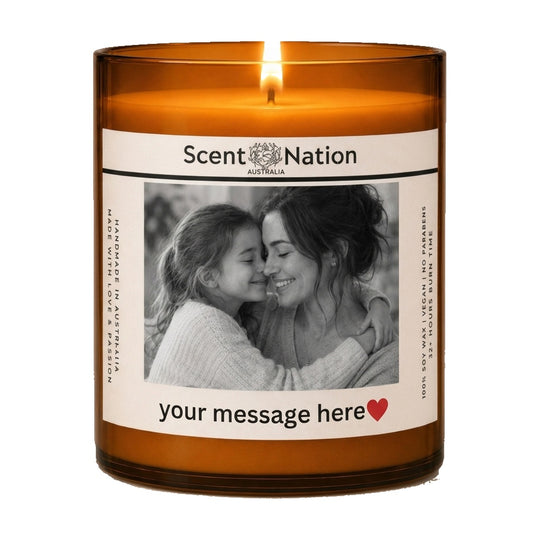
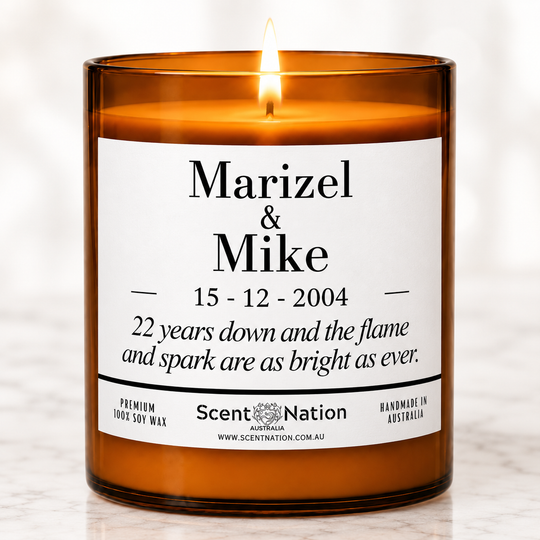
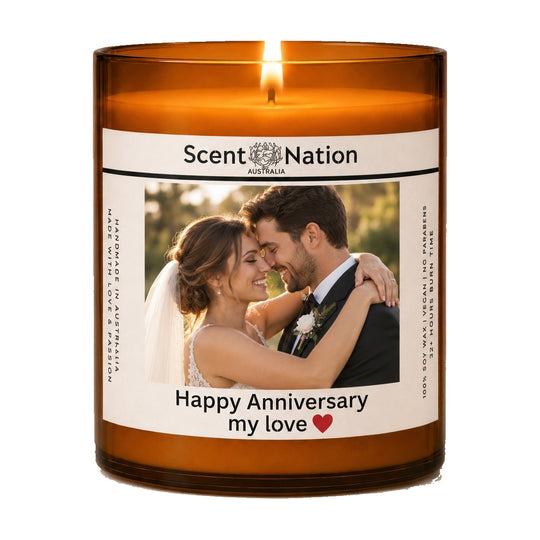
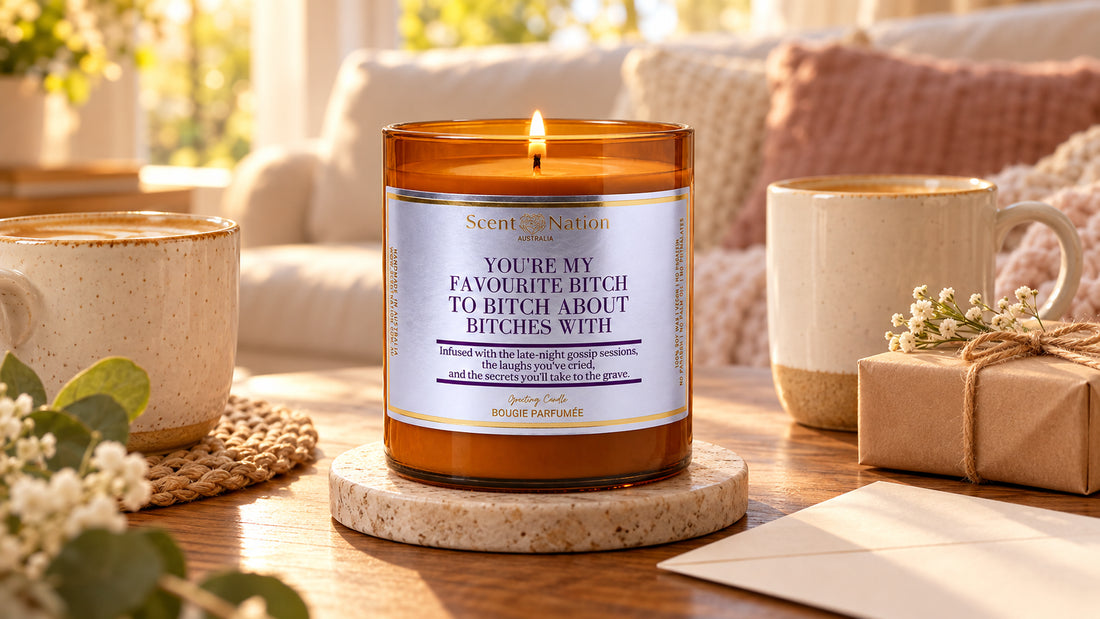
For a candle-loving friend, browse gifts for a best friend or map and location gifts. A map might represent where you met, not necessarily where either of you lives now.
Write something specific
Original sample lines include “Different postcodes, same excellent conversations”, “For the friend I still want to tell first” and “A little reminder that you are part of my everyday life”.
Use your own voice. A private joke can work in a card, but check whether your friend would enjoy displaying it on a gift. Our personalised-gift guide helps compare short messages, photos and places.
Plan the delivery thoughtfully
Confirm the current address and whether your friend will be home. Check the shipping information for supported destinations and current estimates; do not assume every product or service is available internationally.
If the gift is going overseas, check any relevant destination restrictions and total costs before ordering. A digital invitation, letter or locally arranged experience may be simpler than an uncertain parcel.
A practical guide to long-distance friendship gifts
A good long-distance gift gives the friendship something to do next. A letter can recall a shared memory; an agreed call can restart a ritual; a small keepsake can refer to a place you both know. Confirm the current address before sending anything, and avoid making the recipient feel obliged to match the value or post a public reaction.
The situations below are illustrative gift ideas, with original sample wording. They are not customer stories or testimonials. Choose the direction that matches what you know about the recipient, and adapt the words to your own relationship.
Four ways to make the choice more personal
You used to read together
Consider a chosen book discussion or reading date. This direction works because the gift restarts a shared ritual. Before committing, confirm reading preferences and a suitable time.
Possible wording: “Different sofas, same next chapter”
You share a meaningful place
Consider a location keepsake or photograph. This direction works because the reference belongs to the friendship. Before committing, confirm the place and preferred display style.
Possible wording: “Same place in my life, different postcode”
They have moved into a small home
Consider a compact letter-led present. This direction works because the gift travels without adding a storage burden. Before committing, confirm the current address and whether an object is welcome.
Possible wording: “A little friendship, delivered”
Your schedules rarely overlap
Consider a message or activity that does not require an instant response. This direction works because connection can work without demanding availability. Before committing, confirm their preferred way to stay in touch.
Possible wording: “Read this whenever you have a quiet moment”
Three questions to settle before choosing
- Does the gift give you a shared next step?
- Have you confirmed the address?
- Are you expecting an immediate response?
Make an experience easy to accept and enjoy
An experience becomes a useful gift when the recipient can actually take part. Ask about the activity and availability before buying a fixed booking. Someone can love the idea of an outing and still find its location, date or duration inconvenient. A flexible plan is often easier to enjoy than a surprise that requires rearranging work or family commitments.
Decide what you are giving: the cost of the activity, your company, the planning, transport or a combination. Make that clear in the card. “I would love to take you for lunch; you choose the day” is a different present from a voucher the recipient must arrange alone. Neither is automatically better, but the expectations should be clear.
Check the provider’s current terms before committing. Look at booking requirements, expiry, cancellation arrangements and anything the recipient needs to bring or pay for separately. Do not present a fixed-date booking as flexible if the terms do not support that. Where practical details are important, choose together and let the personal note provide the surprise.
If the real gift is time together, give it a next step. Offer two possible dates, agree on a place or explain who will make the arrangements. Avoid leaving the recipient with an attractive promise that never becomes a plan. You can still include a small keepsake, but only if it adds meaning rather than becoming the main cost of an experience they wanted more.
Decide how precisely to show a meaningful place
Write down the memory in an ordinary sentence before choosing a map or location design. “This is where we met” gives you a different brief from “This was our first home”. The design should express that sentence clearly. If you cannot explain why the place matters, a photograph or a simple message may be a better personal detail.
Check the location against something reliable, such as your own records or an agreed family memory. A familiar town name may be enough, while a venue or street can require closer checking. Do not add coordinates or an exact address simply because they look decorative. Those details are useful only when they are correct and wanted.
Think about where the present will be displayed. A private home address may not be appropriate on an item kept in a workplace, photographed publicly or given to someone who values privacy. You can often tell the same story through a town, neighbourhood or short caption. Let the recipient’s comfort set the level of detail.
Finally, separate the location from the date. You may know the place with certainty and still be unsure when the event happened. It is better to omit an uncertain date than to make a confident guess. Put only checked information on the permanent item, and use the card to describe the memory in your own words.
Plan the order around the date you need the gift
Start with the day the gift must be in your hands or with the recipient. Then check the current production information and delivery arrangements separately. A personalised item may need preparation before it can be dispatched. Do not read a shipping estimate as a promise that covers the whole order process.
Gather names, dates, photographs and approvals before you place the order. Waiting for a family member to send the right picture can use more time than choosing the product. For a group gift, set an internal deadline for the final brief. If a required detail remains uncertain, choose a simpler design rather than submitting a guess to avoid waiting.
Confirm the delivery address with the recipient or a reliable contact, especially after a move. Decide who will receive the parcel and whether someone needs to carry it to the celebration. If you are sending directly, check which message and packaging options the seller actually provides. Do not assume that a price-free packing slip, gift wrap or personal note is automatically included.
When the timeline is uncertain, make a clear alternative plan. You could give the card on the occasion and explain that a separately chosen gift is on its way, or select an appropriate item that is available in time. Avoid making an arrival claim you cannot support. The relationship can be celebrated on the day even when the parcel follows later.
Keep private details in the right place
Decide which details belong on a display item and which belong only in the card. A first name and a short phrase can tell a story without showing an address, full birthdate or private family information. More personal data does not automatically make a gift more meaningful. Include only the details needed to express the connection.
Ask before using someone else’s photograph, a private family message or a sensitive memory. The recipient may love the picture in a family album and still prefer not to have it displayed in another format. If several people appear, think about whether the image is suitable for the setting in which the gift will be used.
Separate the gift from public content about the gift. Giving a personal present does not mean the recipient wants a photograph of it posted online. Ask before sharing their image or story, and check whether any visible wording reveals information they keep private. A keepsake can remain meaningful without becoming a public announcement.
For a workplace, school or care-related message, use a specific but appropriate appreciation. Leave confidential details out of a shared card. If you want to explain something personal, write it in a private note instead. The goal is a gift the recipient can enjoy and display comfortably, with control over how much of their story other people see.
Short wording you can adapt
Use these original sample lines as a starting point. Keep the wording that sounds like you, and change or remove anything that does not fit the person. A short line can sit on an appropriate personalised item; the longer explanation belongs in the card. Check the actual customisation options and space available before ordering.
- Far away, still very much here
- One friendship, several postcodes
- For our next properly long catch-up
- A small reminder of a very big friendship
To make a line your own, add one accurate personal detail: the name they use, a memory they recognise or a brief reference to the occasion. You do not need to use all three. Read the result aloud before deciding whether it belongs on the gift itself or in a private note.
Do not make the gift a test
Your friend should not need to respond immediately, match the value or prove they are using it. A short note such as “No need to open this on camera” can take pressure out of the moment.
Choose something that makes the friendship easier to enjoy. The most meaningful part may be the next conversation it starts.