
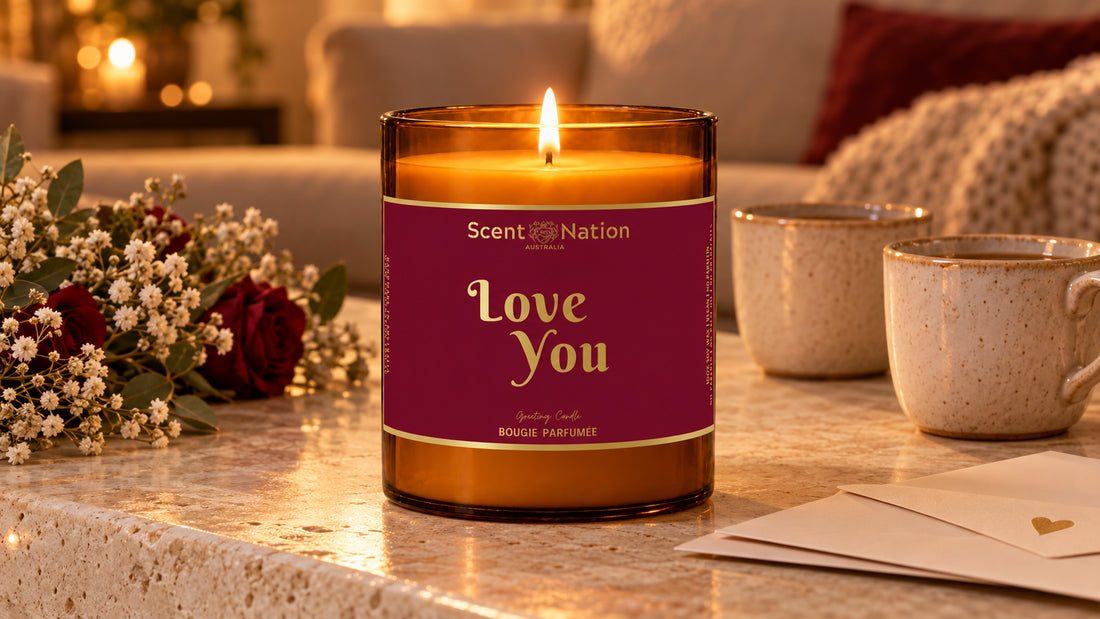
A personal gift for your wife can begin with a moment you both recognise: a place you met, a photograph from an ordinary happy day or a phrase that belongs to your relationship. The meaning comes from the connection, not the amount of text on the product.
Before choosing a keepsake, consider whether she would prefer an experience, a requested item or time with the practical arrangements handled.
Choose a memory that is hers too
The most dramatic occasion is not always the strongest choice. A familiar holiday spot, first home or regular café may mean more than a formal photograph she never liked.
Ask yourself why the memory matters to her. If the answer is mostly about your own experience, choose a detail that better reflects the relationship you share.
Match the format to her preferences
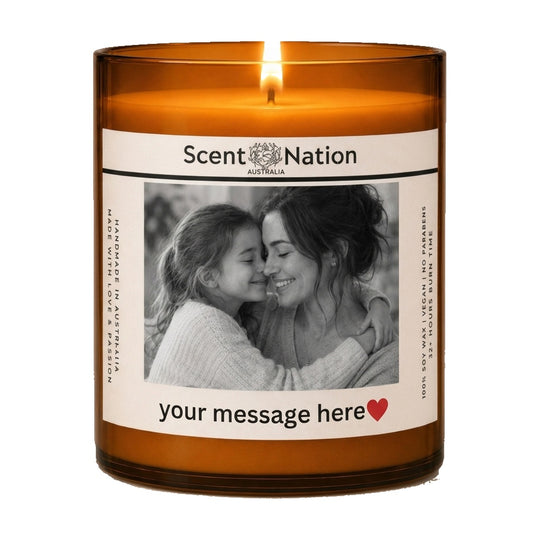
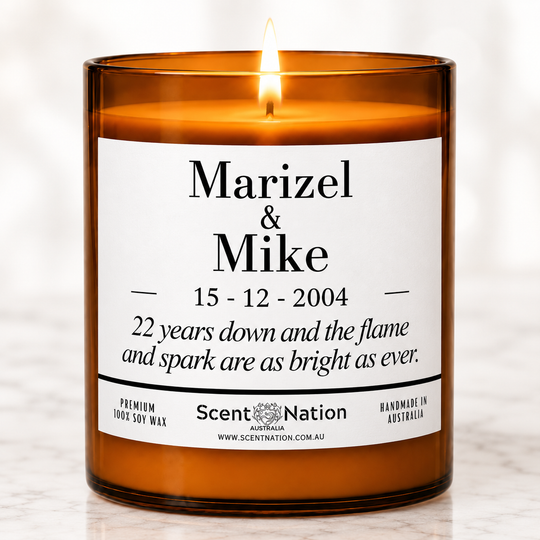
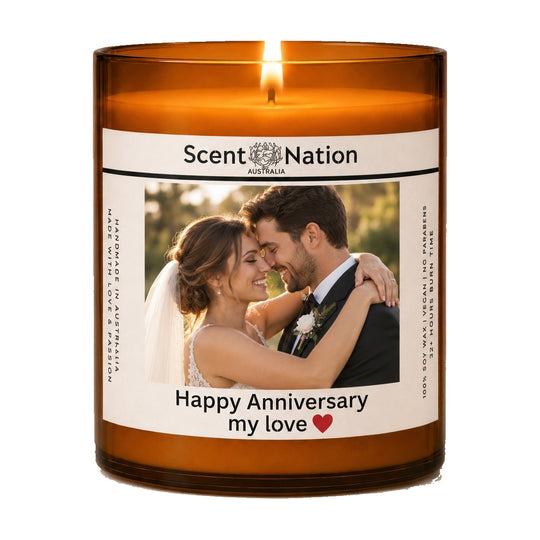
A framed image suits someone who likes photographs on display. A photo book can keep a story private. A map-style gift can recall a meaningful place. A personalised candle is an option if she enjoys candles and the available fragrance choices suit her.
Browse gifts for your wife or map and location candles once the idea is clear. Check the selected product's actual fields rather than assuming every design accepts the same details.
Write a message with one concrete detail
Instead of trying to summarise the whole relationship, name something you value: “For the walks that turn into long conversations” or “Still glad we chose that table by the window”. These are sample lines; replace them with something real to you both.
If the story needs explaining, put it in the card. The gift itself can carry a name, date or short phrase. The personalised-gift guide can help compare those formats.
Let practical gifts be thoughtful too
If she has requested a particular item, listening can be more personal than overriding the request with a romantic surprise. Confirm the exact version and add a note explaining that you wanted her to have the one she would choose.
An experience should also fit her schedule and interests. Arrange the details without assuming she can reorganise work, care or other commitments around a booking.
A practical guide to personal gifts for your wife
Choose a memory that matters to both of you, then ask whether the gift format suits her current preferences. An ordinary happy day can be more personal than repeating a formal wedding image. Keep the present about her as well as the relationship. If she has requested something useful or an experience, a sentimental note can accompany that choice.
The situations below are illustrative gift ideas, with original sample wording. They are not customer stories or testimonials. Choose the direction that matches what you know about the recipient, and adapt the words to your own relationship.
Four ways to make the choice more personal
She loves an ordinary shared photograph
Consider a small photo keepsake. This direction works because the image recognises daily life together. Before committing, confirm a photograph she likes of herself.
Possible wording: “One ordinary day, one favourite memory”
A place has meaning for both of you
Consider a location-based present. This direction works because the memory is shared and immediately recognisable. Before committing, confirm the exact place and relevant date.
Possible wording: “The place where our story found its feet”
She has asked for an experience
Consider a booked or jointly chosen outing. This direction works because the gift listens to her actual wish. Before committing, confirm availability and what she wants included.
Possible wording: “A day for you, with the details handled”
She prefers useful gifts
Consider the requested item and a personal letter. This direction works because practical and personal can sit together. Before committing, confirm the specific item or version.
Possible wording: “Chosen for you, with a little of our story”
Three questions to settle before choosing
- Is this her preferred memory too?
- Does the gift recognise her current interests?
- Have you handled the practical arrangements?
Decide how precisely to show a meaningful place
Write down the memory in an ordinary sentence before choosing a map or location design. “This is where we met” gives you a different brief from “This was our first home”. The design should express that sentence clearly. If you cannot explain why the place matters, a photograph or a simple message may be a better personal detail.
Check the location against something reliable, such as your own records or an agreed family memory. A familiar town name may be enough, while a venue or street can require closer checking. Do not add coordinates or an exact address simply because they look decorative. Those details are useful only when they are correct and wanted.
Think about where the present will be displayed. A private home address may not be appropriate on an item kept in a workplace, photographed publicly or given to someone who values privacy. You can often tell the same story through a town, neighbourhood or short caption. Let the recipient’s comfort set the level of detail.
Finally, separate the location from the date. You may know the place with certainty and still be unsure when the event happened. It is better to omit an uncertain date than to make a confident guess. Put only checked information on the permanent item, and use the card to describe the memory in your own words.
Turn a photograph into a clear personal brief
Choose the photograph for its meaning before deciding how it should be displayed. Look for an image in which the important people or subject are easy to recognise. A technically tidy picture is useful, but a photograph the recipient dislikes of themselves is still the wrong choice. Ask which version they prefer if there is any doubt.
Use the original image file where possible. A screenshot may include a phone interface, captions or a crop that removes part of the story. Before submitting it, open the file you intend to upload and check the edges. If two people should appear together, make sure neither is cut off and that the background does not overwhelm them.
Write a separate note explaining what must remain visible. For example, say that both faces need to appear, or that the dog is the main subject. Check the product’s actual upload instructions and available design options; do not assume the maker can repair every image or offer a proof unless that service is stated.
Keep the printed caption shorter than the story in your card. A name, a date or one recognisable phrase can be enough on the object. The card can explain why you chose the picture. If the image includes private family material, ask before putting it on a display item or sharing a photograph of the finished present online.
Make an experience easy to accept and enjoy
An experience becomes a useful gift when the recipient can actually take part. Ask about the activity and availability before buying a fixed booking. Someone can love the idea of an outing and still find its location, date or duration inconvenient. A flexible plan is often easier to enjoy than a surprise that requires rearranging work or family commitments.
Decide what you are giving: the cost of the activity, your company, the planning, transport or a combination. Make that clear in the card. “I would love to take you for lunch; you choose the day” is a different present from a voucher the recipient must arrange alone. Neither is automatically better, but the expectations should be clear.
Check the provider’s current terms before committing. Look at booking requirements, expiry, cancellation arrangements and anything the recipient needs to bring or pay for separately. Do not present a fixed-date booking as flexible if the terms do not support that. Where practical details are important, choose together and let the personal note provide the surprise.
If the real gift is time together, give it a next step. Offer two possible dates, agree on a place or explain who will make the arrangements. Avoid leaving the recipient with an attractive promise that never becomes a plan. You can still include a small keepsake, but only if it adds meaning rather than becoming the main cost of an experience they wanted more.
Keep private details in the right place
Decide which details belong on a display item and which belong only in the card. A first name and a short phrase can tell a story without showing an address, full birthdate or private family information. More personal data does not automatically make a gift more meaningful. Include only the details needed to express the connection.
Ask before using someone else’s photograph, a private family message or a sensitive memory. The recipient may love the picture in a family album and still prefer not to have it displayed in another format. If several people appear, think about whether the image is suitable for the setting in which the gift will be used.
Separate the gift from public content about the gift. Giving a personal present does not mean the recipient wants a photograph of it posted online. Ask before sharing their image or story, and check whether any visible wording reveals information they keep private. A keepsake can remain meaningful without becoming a public announcement.
For a workplace, school or care-related message, use a specific but appropriate appreciation. Leave confidential details out of a shared card. If you want to explain something personal, write it in a private note instead. The goal is a gift the recipient can enjoy and display comfortably, with control over how much of their story other people see.
Short wording you can adapt
Use these original sample lines as a starting point. Keep the wording that sounds like you, and change or remove anything that does not fit the person. A short line can sit on an appropriate personalised item; the longer explanation belongs in the card. Check the actual customisation options and space available before ordering.
- Still glad our paths crossed
- For the life we keep making together
- A memory that belongs to us
- Your kind of day, with all my love
To make a line your own, add one accurate personal detail: the name they use, a memory they recognise or a brief reference to the occasion. You do not need to use all three. Read the result aloud before deciding whether it belongs on the gift itself or in a private note.
Keep the occasion in proportion
A birthday, anniversary and everyday thank-you do not need identical gifts. Choose the scale and wording for the moment. The present should make her feel understood, rather than obliged to appreciate the effort involved in creating a surprise.