


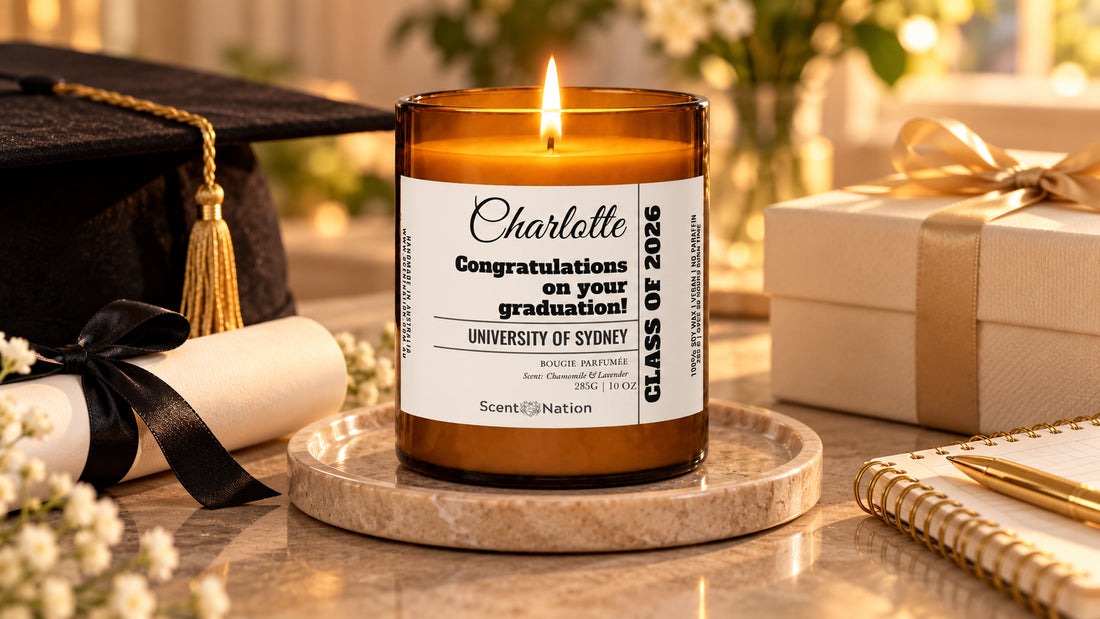
A graduation message should recognise the person and the effort behind the achievement. You do not need to predict a brilliant career or tell them what their next step should be. A clear, sincere congratulations is enough.
Use the original examples below as starting points. Change the details to match the graduate, and verify any qualification, title, institution or year before printing it on a permanent gift.
Short wording for a personalised gift
- “Congratulations, Michelle — Class of 2026.”
- “For everything it took to get here.”
- “Your next chapter starts with this achievement.”
- “Proud of your effort. Excited for your possibilities.”
- “You did the work. This moment is yours.”
Keep the short version on the gift and the full message in the card. Browse graduation gifts to check which designs accept the details you want to include.
From a parent to a daughter or son
“We are proud of what you achieved and of the way you kept going. You do not have to have every next step worked out to deserve this celebration.”
For Year 12: “Finishing school is a real achievement. Whatever comes next, we are here to cheer you on and help you find your way.”
Mention a real quality you observed, such as persistence or kindness, rather than comparing the graduate with siblings or classmates. The day belongs to their achievement.
For a friend or partner
“I have seen some of the late nights and hard weeks behind this day. I am so glad I get to celebrate it with you.”
“You have earned a moment to stop, look around and enjoy what you have done. Congratulations, my favourite graduate.”
Only refer to experiences you actually shared. A straightforward “I am delighted for you” is warmer than an invented account of being there for every difficult moment.
For a nursing or professional graduate
“Congratulations on completing your studies. Wishing you supportive colleagues, room to keep learning and a start you can feel proud of.”
Completion of a course and professional registration are not necessarily the same event. Use the exact qualification or role the recipient has confirmed rather than adding an unverified professional title.
A practical guide to graduation messages for gifts and cards
Write about the effort and achievement you can actually recognise. A graduation message does not need to promise a dream job or a particular future. Check qualifications, preferred titles and dates before putting them on a permanent item. The graduate may value a private acknowledgement more than a public speech, especially when the celebration is part of a complicated transition.
The situations below are illustrative gift ideas, with original sample wording. They are not customer stories or testimonials. Choose the direction that matches what you know about the recipient, and adapt the words to your own relationship.
Four ways to make the choice more personal
A parent writing to an adult child
Consider recognition of the work behind the milestone. This direction works because pride can be expressed without directing the next decision. Before committing, confirm the qualification and how they want it named.
Possible wording: “Proud of your effort, and proud of the person you are”
A friend who studied alongside them
Consider a shared memory followed by congratulations. This direction works because the note celebrates a journey you both understand. Before committing, confirm the memory is comfortable to share publicly.
Possible wording: “We made it through the deadlines. You earned this moment.”
An adult returning to study
Consider a line recognising persistence. This direction works because the achievement is not limited to a first qualification. Before committing, confirm whether they want the personal circumstances mentioned.
Possible wording: “A new achievement, built on your determination”
A graduate still choosing a next step
Consider an open-ended congratulations. This direction works because celebration does not depend on a fixed career plan. Before committing, confirm they want encouragement rather than advice.
Possible wording: “This achievement is yours. Take your next step in your own time.”
Three questions to settle before choosing
- Is the qualification correct?
- Are you celebrating rather than giving career advice?
- Would the graduate prefer a quiet message?
Check names, dates and wording before they become permanent
Copy the recipient’s preferred name from a reliable source rather than memory. Ask whether they use a nickname, full name, family title or a particular spelling. For a couple or group, check every name separately. One correct name does not make the rest of the order correct, and a family relationship does not automatically tell you how someone wants to be addressed on a display item.
Keep the date format clear. A written month can avoid ambiguity, but use the format supported by the product you are ordering. Verify the underlying date first: the ceremony date may differ from the date a course finished, and a moving date may differ from settlement. Choose the event you mean to remember rather than mixing several milestones into one line.
Read the final message aloud. This helps you hear whether it sounds like something you would actually say and whether a joke needs more explanation than the label allows. Check punctuation, apostrophes and any accent marks in names. Do not add a qualification, professional title or number of years simply because it looks impressive; include it only when it is confirmed.
Save one approved version before submitting the order. If family members are helping, ask them to correct that exact version rather than sending alternative drafts in separate messages. Check any character limit or available customisation field on the current product page. Where a detail is uncertain, leave it out or confirm it before ordering. A simple accurate design is stronger than a detailed guessed one.
Choose the tone before shortening the message
Start with one of three intentions: appreciation, celebration or companionship. Appreciation thanks the person for something real. Celebration recognises a moment or achievement. Companionship says that you are present without making a demand. Choosing the intention first makes it easier to remove words that do not serve the gift.
Then decide where the words will appear. A label should make sense without a long explanation. A card can carry a memory, context and your own voice. A group card may need wording everyone is comfortable signing, while a private letter can be more specific. Do not force the longest version onto the smallest surface.
For humour, use a familiar harmless routine rather than a vulnerable subject. A joke about always choosing one more chapter is different from a joke about someone’s age, finances or relationship. Imagine the recipient reading the line in front of other people. If the joke relies on their embarrassment, choose another line.
After editing, ask whether the message still sounds like you. A simple sentence can be more personal than an elaborate sentiment you would never say aloud. Keep one recognisable detail and remove the rest of the decoration. You can write a short label and a warmer card without repeating exactly the same words on both. The two pieces should support each other.
Edit a memory collection so it is easy to enjoy
Set a small contribution brief before asking people for memories. Request one photograph, one short recollection or one sentence about the recipient. Give a deadline and explain the intended format. An open request for everything often creates a sorting project rather than a gift. A few clear, welcome contributions can make a more coherent keepsake.
Choose memories from the recipient’s perspective. A story that entertains the family may be embarrassing to the person receiving the present. Leave out material that requires them to defend, explain or laugh along with something uncomfortable. If a photograph or story concerns other people’s private lives, ask before including it.
Organise the material around a simple theme: a shared trip, a familiar ritual, a relationship or a milestone. Add names and short captions where they help the recipient recognise the context. Check dates rather than inventing an order. If you are unsure, a caption such as “One of our favourite days together” can be accurate without a calendar detail.
Balance memories with the person’s current interests. A birthday or anniversary gift does not need to imply that the past was the best part of their life. Finish with an invitation, a warm wish or a reference to something they enjoy now. Keep the collection small enough to look through comfortably, and let a single selected image become the focus of any personalised object.
Keep private details in the right place
Decide which details belong on a display item and which belong only in the card. A first name and a short phrase can tell a story without showing an address, full birthdate or private family information. More personal data does not automatically make a gift more meaningful. Include only the details needed to express the connection.
Ask before using someone else’s photograph, a private family message or a sensitive memory. The recipient may love the picture in a family album and still prefer not to have it displayed in another format. If several people appear, think about whether the image is suitable for the setting in which the gift will be used.
Separate the gift from public content about the gift. Giving a personal present does not mean the recipient wants a photograph of it posted online. Ask before sharing their image or story, and check whether any visible wording reveals information they keep private. A keepsake can remain meaningful without becoming a public announcement.
For a workplace, school or care-related message, use a specific but appropriate appreciation. Leave confidential details out of a shared card. If you want to explain something personal, write it in a private note instead. The goal is a gift the recipient can enjoy and display comfortably, with control over how much of their story other people see.
Short wording you can adapt
Use these original sample lines as a starting point. Keep the wording that sounds like you, and change or remove anything that does not fit the person. A short line can sit on an appropriate personalised item; the longer explanation belongs in the card. Check the actual customisation options and space available before ordering.
- You earned this chapter
- Congratulations on everything this moment represents
- Your effort deserves celebrating
- Class of [verified year] — beautifully done
To make a line your own, add one accurate personal detail: the name they use, a memory they recognise or a brief reference to the occasion. You do not need to use all three. Read the result aloud before deciding whether it belongs on the gift itself or in a private note.
For a colleague or someone you know less closely
“Congratulations on this achievement. Wishing you every success with the opportunities ahead.” A professional message can be warm without becoming overly personal.
If you are still choosing a present, our graduation gift guide compares practical, sentimental and personalised options. For the final layout, use the personalisation guide and check spelling once more before ordering.