
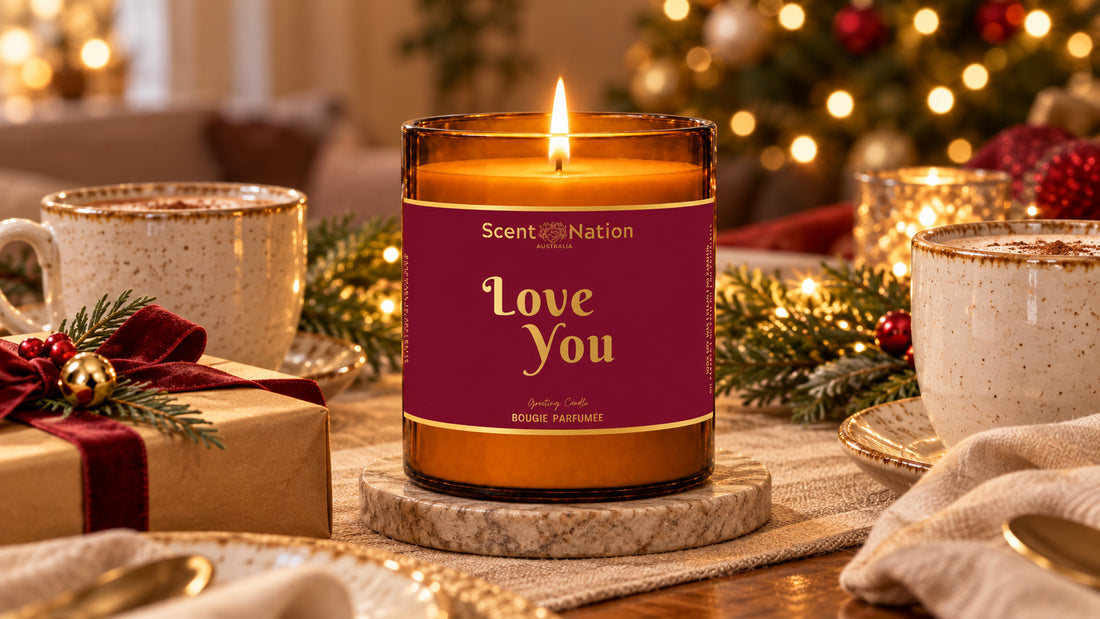
A shared Christmas gift should feel like a present for both people. Start with something they enjoy together, or something each person will be comfortable using. A gift that perfectly suits one partner and merely tolerates the other is not really a joint gift.
You also do not need to furnish their home. Many couples already own the practical basics, particularly if they have combined two households.
Choose a shared Christmas present without treating couples as identical

Mark the place that belongs to both people
Personalised Map Candle makes a location the centre of the gift. Its available personal details include a place, message and date, which can represent a first meeting, wedding or meaningful move. Agree which event you are celebrating before choosing the details. Both partners should recognise the story; a location meaningful to only one person may be better as an individual present.
Use initials for a quieter personal detail
Personalised Monogram Candle is a monogram direction when the couple likes a restrained design. Confirm the initials and preferred names instead of assuming a shared surname or a particular order. This is especially useful when you know their home style better than their private story. Keep the card inclusive of both people, and check the current product choices before deciding which version suits them.
Choose a photograph they both enjoy
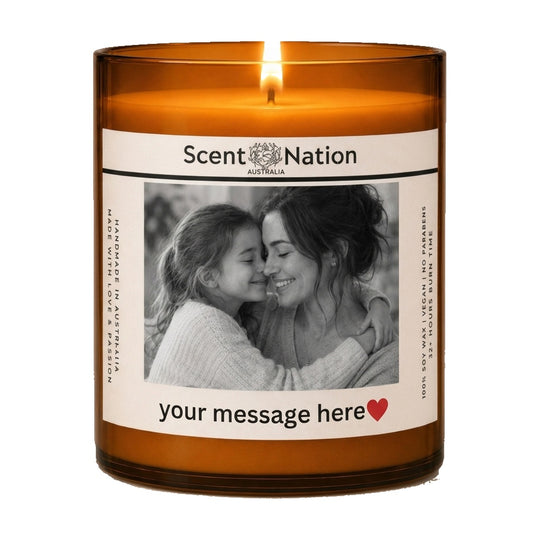
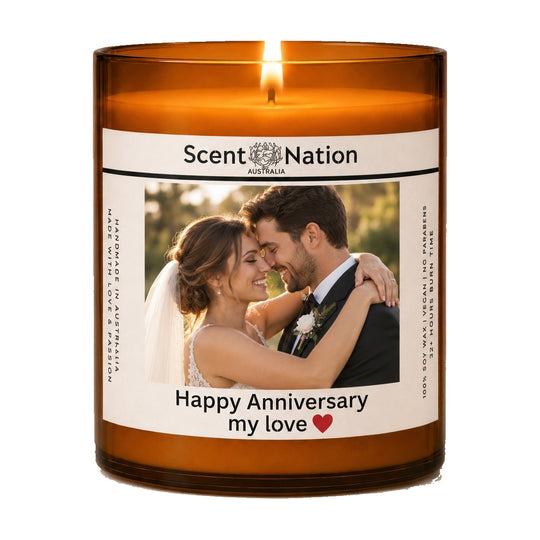
Anniversary Photo Candle brings a shared picture into the present. A holiday, anniversary or everyday moment can work if both partners are happy with the image. Avoid selecting a portrait merely because you have access to it. If one person rarely likes being photographed, a place-based or initial-based design may be the more comfortable way to make the gift personal.
A shared item needs two yeses
You do not need both partners to answer the same questions, but you do need a reasonable basis for believing they will both welcome the gift. One may love home fragrance while the other prefers an unscented home. One may enjoy displaying photographs while the other values privacy. Those differences matter more than the fact that they live together.
If you are unsure, give them a choice between two clear directions rather than asking what they want in the abstract. A shared outing or meal may fit better than a display object. If choosing a candle, use a fragrance they already enjoy together and keep the design connected to a memory they share. A present that creates negotiation about where to put it is less successful than a smaller choice they can both receive easily.
Avoid assigning the gift to the person who manages the home
A household present can accidentally become another item for one partner to organise, clean or store. Check that the gift reflects joint enjoyment rather than unpaid work. The same applies to an experience: arrange the booking only after checking both schedules, and explain what is included. For a personalised label, use both preferred names equally unless the couple has asked for another approach. Their own language for their relationship is a better guide than a standard wedding-style phrase.
Is a couple’s gift appropriate for a new relationship?
Keep the level of personalisation proportionate. An elaborate permanent declaration can feel premature. A shared interest or simple seasonal message may be more comfortable than commemorating a date they have not chosen to celebrate.
What if their fragrance preferences are different?
Choose a different shared present or let them select together. Do not describe a scent as universally liked. The most personal label cannot resolve a practical preference that one partner does not share.
Decide what they like sharing
Some couples enjoy cooking, some prefer going out and others value a quiet evening at home. Ask which describes them now, rather than choosing the experience you would want.
- A meal or activity can work if booking, travel and accessibility suit them both.
- Favourite food or drink can be useful when dietary preferences are known.
- A shared photograph or location keepsake can recognise their relationship without adding a large household item.
- A contribution towards something they have requested avoids buying a duplicate.
If one person loves surprises and the other prefers choosing, give them a small set of options rather than a fixed booking.
Personalise the relationship, not just two names
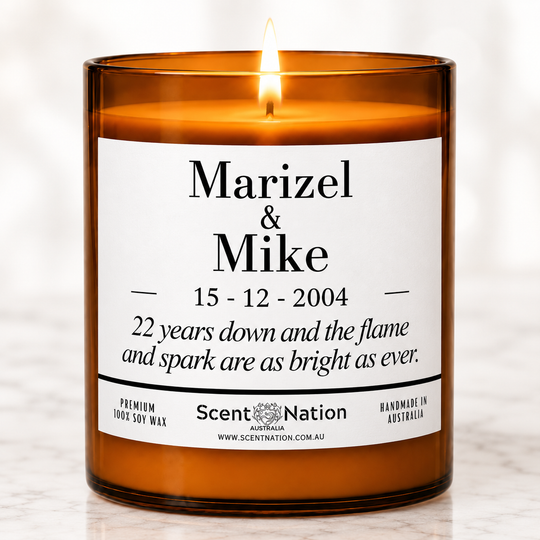
Names are a starting point. A place, date or short phrase can explain why the gift belongs to them. Think of their first home, a meaningful trip or a family saying they both use.
Check how they write their names and whether they share a surname. Do not assume that marriage, partnership or living together changes how either person wants to be addressed.
Our gifts for couples and map and location candles offer possible starting points for candle-loving households. Confirm the selected product's personalisation options before settling on the layout.
Be careful with shared fragrance
If one partner enjoys candles and the other dislikes fragrance, a candle may be better as an individual gift. For a joint present, choose something both welcome or let them select it together.
The same principle applies to décor. Neutral colours are not a guarantee that an object suits their space. Ask before buying large artwork, bulky accessories or anything requiring installation.
A practical guide to shared Christmas gifts for couples
A joint gift needs two genuine yeses. Think about their shared routine, check whether they have combined households recently and make sure your plans work for both partners. If their tastes differ, give a flexible experience or two complementary small items rather than forcing them into one home-fragrance choice or one decorative style.
They enjoy cooking together
Consider a chosen cooking evening or familiar pantry theme. This direction works because both people take part in a shared interest. Before committing, confirm food preferences and who enjoys doing the cooking.
Possible wording: “For your next evening together”
They have just combined households
Consider an experience rather than duplicate homeware. This direction works because the gift celebrates the relationship without adding equipment. Before committing, confirm what they already own.
Possible wording: “New traditions, together”
They remember their first meeting place
Consider a location keepsake featuring both names. This direction works because the same memory belongs to both recipients. Before committing, confirm the location and each person’s preferred name.
Possible wording: “Where your story began”
Their hobbies are very different
Consider a flexible shared outing chosen with them. This direction works because neither partner needs to compromise on the present. Before committing, confirm availability and an activity both genuinely enjoy.
Possible wording: “A day for the two of you”
Three questions to settle before choosing
- Would each partner choose this gift?
- Is the gift practical for their home?
- Have both names and shared dates been checked?
Decide how precisely to show a meaningful place
Write down the memory in an ordinary sentence before choosing a map or location design. “This is where we met” gives you a different brief from “This was our first home”. The design should express that sentence clearly. If you cannot explain why the place matters, a photograph or a simple message may be a better personal detail.
Check the location against something reliable, such as your own records or an agreed family memory. A familiar town name may be enough, while a venue or street can require closer checking. Do not add coordinates or an exact address simply because they look decorative. Those details are useful only when they are correct and wanted.
Think about where the present will be displayed. A private home address may not be appropriate on an item kept in a workplace, photographed publicly or given to someone who values privacy. You can often tell the same story through a town, neighbourhood or short caption. Let the recipient’s comfort set the level of detail.
Finally, separate the location from the date. You may know the place with certainty and still be unsure when the event happened. It is better to omit an uncertain date than to make a confident guess. Put only checked information on the permanent item, and use the card to describe the memory in your own words.
Check food, drink and fragrance preferences separately
A gift theme does not establish a taste. A person who likes quiet evenings may have strong fragrance preferences; a keen cook may avoid particular foods; a reader may prefer neither tea nor coffee. Ask about the relevant preference before adding a consumable. If the detail remains unknown, choose another direction rather than filling the hamper with guesses.
For a candle, establish that the recipient enjoys using candles before selecting a fragrance. Then use their stated preference or let them choose from the actual options. Read the maker’s instructions and include the supplied care information. Do not describe a fragrance as universally liked or make health, sleep, therapeutic or pet-safety promises as part of the gift idea.
A non-fragrance or non-food alternative is a complete present, not a compromise that needs extra decoration. A letter, photograph, reading accessory or planned experience can carry the same personal connection. Let the practical preferences narrow the choice; the message and memory can supply the warmth.
Short wording you can adapt
- Another Christmas in your story
- For your favourite evenings together
- Two people, one lovely tradition
- A shared memory, made personal
Make the card include them both
Try a simple line such as “For more good evenings together” or “A little something for your next chapter”. Add a specific memory if you know them well. Avoid private jokes that leave one person out.
For a wider comparison of gift formats, see our personalised-gift guide. Our Christmas guide can help when you decide that two smaller individual presents would suit the couple better.