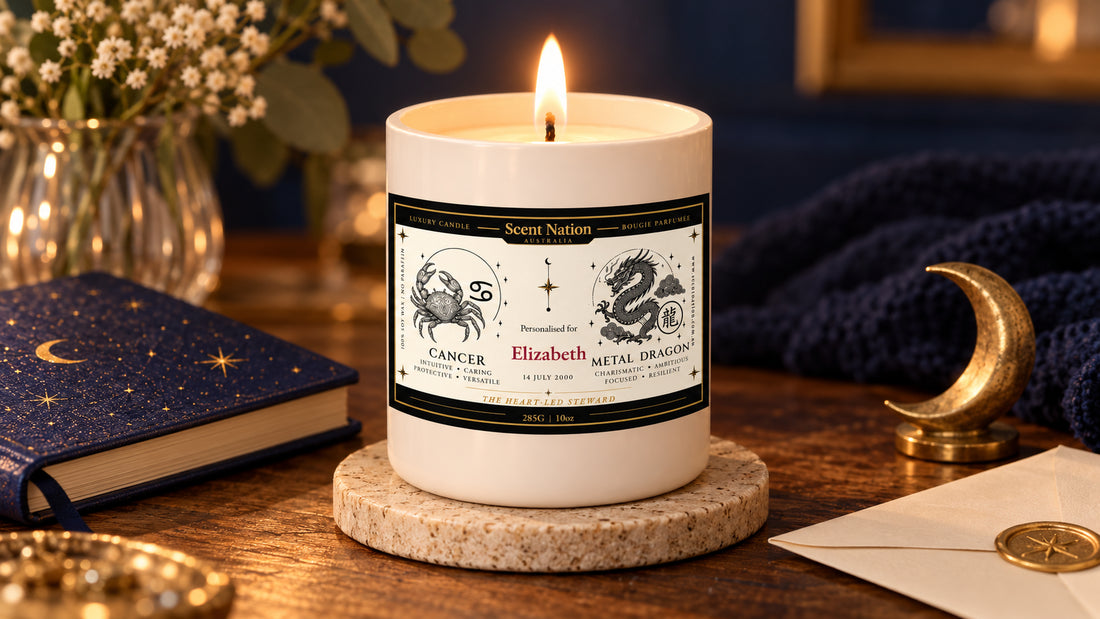
A birthdate or zodiac-themed gift can recognise a birthday through a date, name and symbolic design. It works best for someone who enjoys that theme, rather than as a claim about what their personality must be like.
Start by checking the recipient's interest. A person who likes botanical designs may prefer a birth-flower gift; someone who values photographs may prefer an image from a shared memory.
Confirm the date before choosing the design
Check the day and month directly rather than relying on an old social-media reminder. Read how the specific product assigns its design, particularly if the recipient's birthday falls near a zodiac sign boundary.
Scent Nation's Birthdate Candle collection presents a date-based selection and name personalisation. Review the actual preview and current options before ordering so you know what the label will show.
Treat the symbolism as part of the design
Zodiac signs, elements and associated traits belong to astrological traditions. They should not be presented as verified predictions of personality, health or future events.
A card can say “I thought you would enjoy the symbolism” or “A little celebration of your day” without asserting that a date determines who the person is. The recipient can enjoy the theme playfully or personally on their own terms.
Separate the label from the fragrance choice
A date-themed label does not mean the fragrance automatically suits the recipient. Read the current scent options and choose according to what they like, if you know it. If fragrance preferences are unknown, ask or choose a different gift format.
Do not assume the displayed personality wording or every design element can be edited. Check which controls the product actually offers.
Keep extra wording simple
A name may be enough alongside an already detailed design. If a message is available, consider a short line such as “For the day that gave us you” or “Your day, your own kind of magic”. These are original sample messages, not claims about what the gift will do.
A practical guide to birthdate and zodiac gifts as personal symbols
Treat zodiac details as cultural or astrological symbolism, not a verified prediction of personality, health or relationship outcomes. Start with the correct birthdate and check the actual product’s stated system and inclusions. Where an Eastern zodiac assignment depends on a year boundary, do not infer it from the calendar year alone. A recipient who enjoys these symbols may value a personal keepsake; someone who does not may prefer another format.
The situations below are illustrative gift ideas, with original sample wording. They are not customer stories or testimonials. Choose the direction that matches what you know about the recipient, and adapt the words to your own relationship.
Four ways to make the choice more personal
They enjoy birthday symbolism
Consider a birthdate keepsake with their verified name and date. This direction works because the gift follows an expressed interest. Before committing, confirm the complete birthdate and product details.
Possible wording: “Your date, your personal story”
They enjoy Western and Eastern zodiac themes
Consider a product that clearly describes both systems. This direction works because the combined symbols are the chosen theme. Before committing, confirm the assignment method and actual included details.
Possible wording: “Two symbolic worlds, one birthday”
They prefer a subtle birthday gift
Consider a name-and-date design without personality claims. This direction works because the keepsake can mark the occasion simply. Before committing, confirm preferred name and date format.
Possible wording: “A little reminder of your own beginning”
They do not connect with astrology
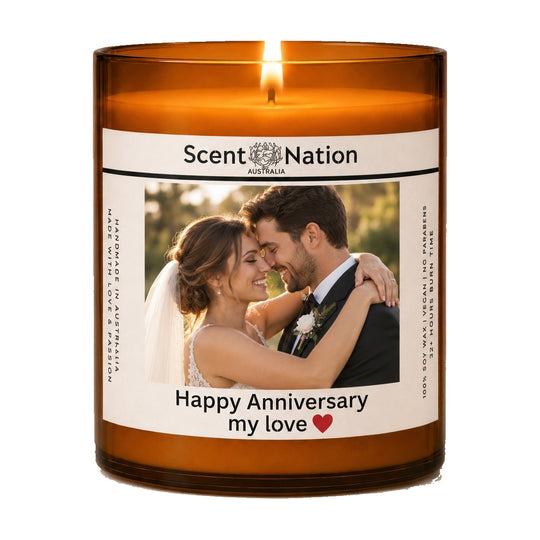
Consider a photo, place or personal-message alternative. This direction works because personalisation still works without the symbols. Before committing, confirm which memory format they enjoy.
Possible wording: “Your birthday, made your way”
Three questions to settle before choosing
- Has the full birthdate been checked?
- Does the recipient enjoy the symbolism?
- Have predictions and compatibility guarantees been avoided?
Keep personal symbolism separate from factual promises
A symbolic gift can be meaningful because the recipient enjoys the association. That does not make the symbolism a verified prediction about personality, compatibility, health or the future. Keep the wording clear about what is being offered: a design, a tradition or an interpretive theme that the recipient can enjoy in their own way.
Check the personal detail that connects the symbol to the recipient. A month-based design needs the correct month; a date-based design needs the complete accurate birthdate. If the product uses more than one system, read how those systems are applied rather than assuming you can determine every result from a single calendar-year label.
Look at the exact current product description and design. A collection name does not confirm every field or inclusion on every item. Choose the product for what it actually shows, and ask the maker when a required detail is unclear. Avoid turning a symbolic theme into a claim that one gift reveals a person’s true nature.
Finally, consider whether the recipient likes the symbolism. A deeply personalised zodiac or botanical gift may be welcome to one person and feel irrelevant to another. A name, photograph, date or shared place offers a personal alternative. The strongest connection is the person’s enjoyment of the chosen detail, not the amount of interpretive language you can fit on the label.
Check names, dates and wording before they become permanent
Copy the recipient’s preferred name from a reliable source rather than memory. Ask whether they use a nickname, full name, family title or a particular spelling. For a couple or group, check every name separately. One correct name does not make the rest of the order correct, and a family relationship does not automatically tell you how someone wants to be addressed on a display item.
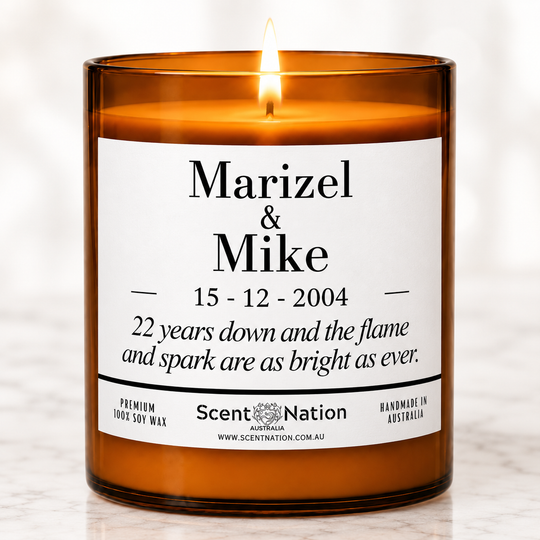
Keep the date format clear. A written month can avoid ambiguity, but use the format supported by the product you are ordering. Verify the underlying date first: the ceremony date may differ from the date a course finished, and a moving date may differ from settlement. Choose the event you mean to remember rather than mixing several milestones into one line.
Read the final message aloud. This helps you hear whether it sounds like something you would actually say and whether a joke needs more explanation than the label allows. Check punctuation, apostrophes and any accent marks in names. Do not add a qualification, professional title or number of years simply because it looks impressive; include it only when it is confirmed.
Save one approved version before submitting the order. If family members are helping, ask them to correct that exact version rather than sending alternative drafts in separate messages. Check any character limit or available customisation field on the current product page. Where a detail is uncertain, leave it out or confirm it before ordering. A simple accurate design is stronger than a detailed guessed one.
Keep private details in the right place
Decide which details belong on a display item and which belong only in the card. A first name and a short phrase can tell a story without showing an address, full birthdate or private family information. More personal data does not automatically make a gift more meaningful. Include only the details needed to express the connection.
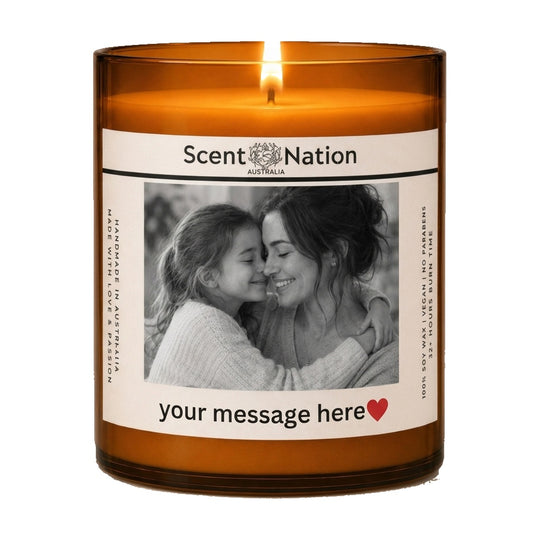
Ask before using someone else’s photograph, a private family message or a sensitive memory. The recipient may love the picture in a family album and still prefer not to have it displayed in another format. If several people appear, think about whether the image is suitable for the setting in which the gift will be used.
Separate the gift from public content about the gift. Giving a personal present does not mean the recipient wants a photograph of it posted online. Ask before sharing their image or story, and check whether any visible wording reveals information they keep private. A keepsake can remain meaningful without becoming a public announcement.
For a workplace, school or care-related message, use a specific but appropriate appreciation. Leave confidential details out of a shared card. If you want to explain something personal, write it in a private note instead. The goal is a gift the recipient can enjoy and display comfortably, with control over how much of their story other people see.
Choose the tone before shortening the message
Start with one of three intentions: appreciation, celebration or companionship. Appreciation thanks the person for something real. Celebration recognises a moment or achievement. Companionship says that you are present without making a demand. Choosing the intention first makes it easier to remove words that do not serve the gift.
Then decide where the words will appear. A label should make sense without a long explanation. A card can carry a memory, context and your own voice. A group card may need wording everyone is comfortable signing, while a private letter can be more specific. Do not force the longest version onto the smallest surface.
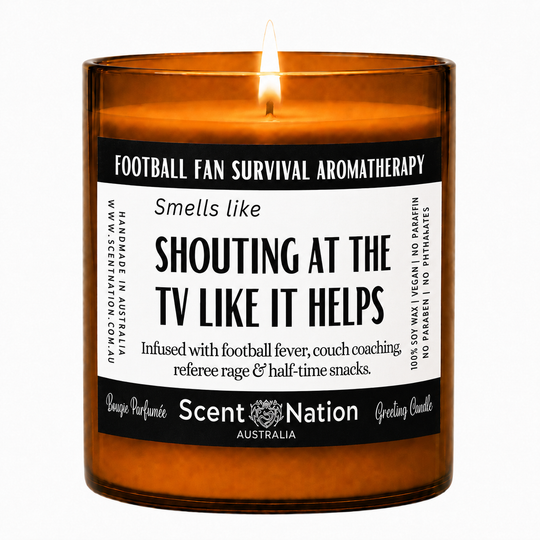
For humour, use a familiar harmless routine rather than a vulnerable subject. A joke about always choosing one more chapter is different from a joke about someone’s age, finances or relationship. Imagine the recipient reading the line in front of other people. If the joke relies on their embarrassment, choose another line.
After editing, ask whether the message still sounds like you. A simple sentence can be more personal than an elaborate sentiment you would never say aloud. Keep one recognisable detail and remove the rest of the decoration. You can write a short label and a warmer card without repeating exactly the same words on both. The two pieces should support each other.
Short wording you can adapt
Use these original sample lines as a starting point. Keep the wording that sounds like you, and change or remove anything that does not fit the person. A short line can sit on an appropriate personalised item; the longer explanation belongs in the card. Check the actual customisation options and space available before ordering.
- One birthdate, a personal keepsake
- For the story you make your own
- Your name, your birthday chapter
- A symbol to enjoy, in your own way
To make a line your own, add one accurate personal detail: the name they use, a memory they recognise or a brief reference to the occasion. You do not need to use all three. Read the result aloud before deciding whether it belongs on the gift itself or in a private note.
Compare other personal formats
The birth-flower collection offers a different symbolic approach. Our personalised-gift guide compares names, photographs, dates and places.
Choose the form of personalisation the recipient would enjoy seeing. The strongest gift can be symbolic without needing to make extraordinary claims.