
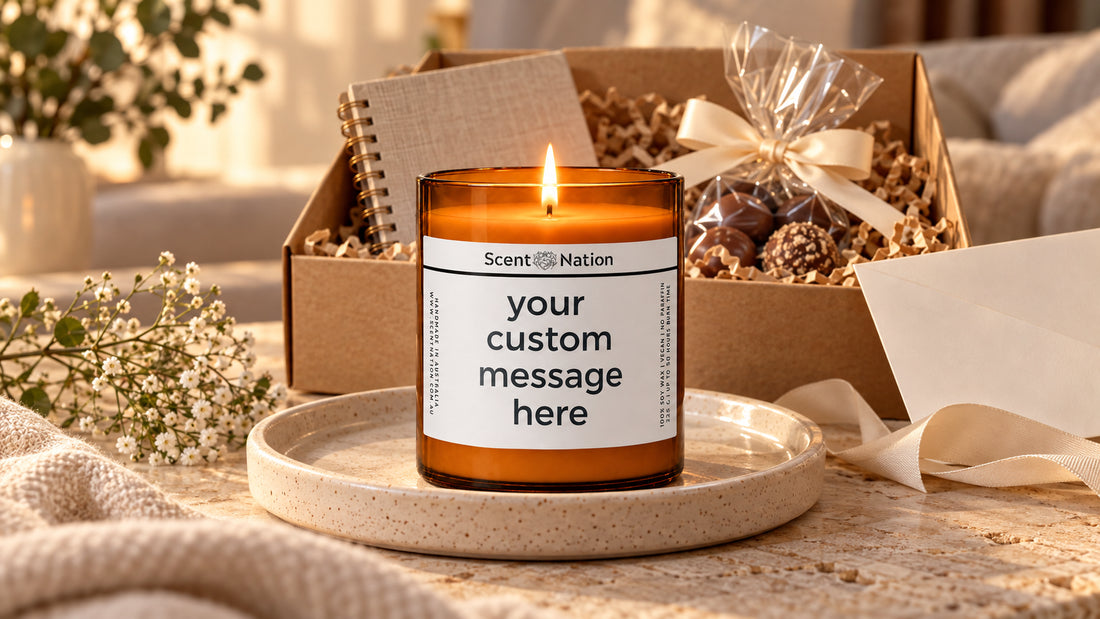
A personalised gift hamper works best when it has one clear idea. Start with a meaningful main item, then add a small number of things that support it. You do not need to fill every gap in the box.
The combinations below are ideas for assembling your own gift, not a claim that Scent Nation sells pre-made hampers or the non-candle items mentioned.
Choose the main item first
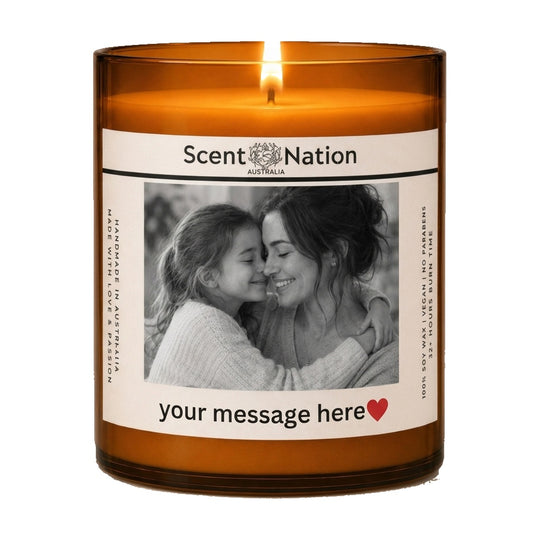
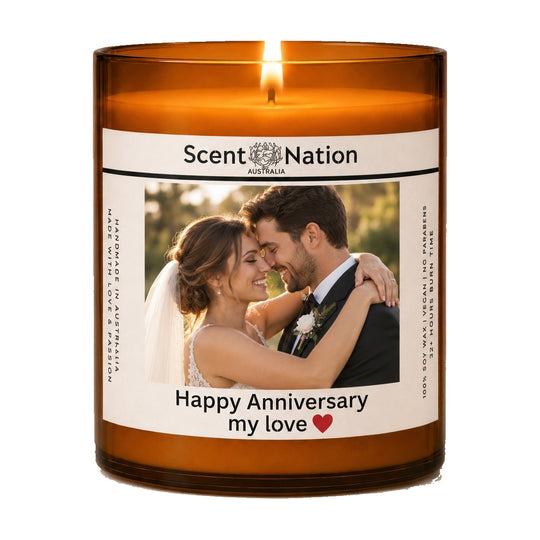
A photograph, personalised candle, requested book or useful accessory can provide the focus. Choose something the recipient would enjoy on its own. Personalisation should strengthen a suitable gift, not compensate for an unsuitable product.
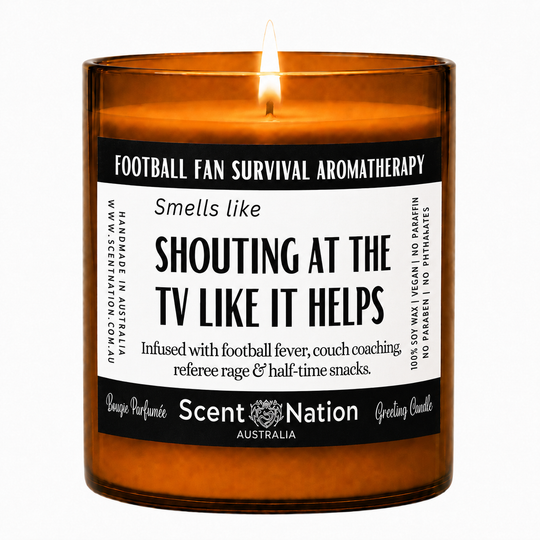
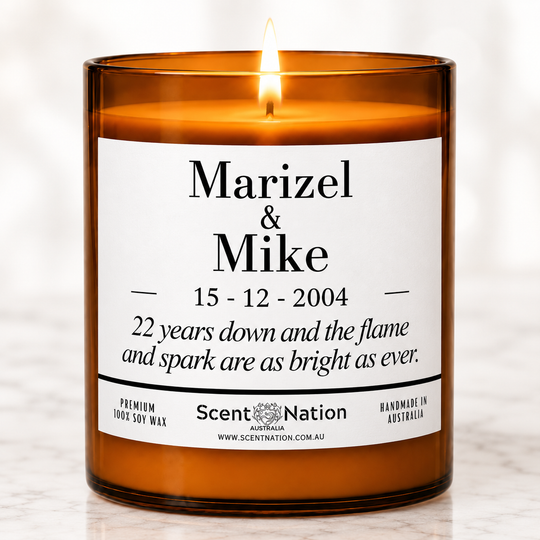
If a candle is appropriate, browse personalised gifts and check the selected product's actual options. A name, date or short message may be enough.
Add by purpose rather than appearance
For a reading-themed gift, a bookmark and a personal reading recommendation can accompany the main item. For a thank-you, a favourite known consumable and a handwritten note may work. For a new-home gift, choose things the household can use without installation or extra storage.
Avoid adding products solely because their packaging matches. Check dietary requirements, fragrance preferences and whether the recipient already owns the practical items you are considering.
Use a three-part budget
- Main gift: the item carrying the meaning.
- Supporting items: only the additions the recipient will enjoy.
- Presentation and delivery: the real cost of getting it to them intact.
Set the total first. If packaging and postage absorb too much of the budget, a simpler gift may be a better use of the money.
Package for the contents
Keep breakable items secure and follow the relevant carrier's packaging guidance. Separate fragranced items from food and check any food seller's storage instructions. Do not remove important product labels or care information for the sake of appearance.
If you are sending across borders, check destination restrictions rather than assuming every item can travel together. Scent Nation's shipping policy applies to orders from the store, not to a hamper you repack and send yourself.
A practical guide to personalised hampers with one meaningful centrepiece
Choose one meaningful main item, then add only what helps the recipient enjoy it. A larger hamper is not automatically more personal. Use the occasion and the recipient’s routine to select the supporting pieces, and check dietary, fragrance and storage preferences before adding them. Keep any keepsake details separate from consumables when you plan the packaging.
The situations below are illustrative gift ideas, with original sample wording. They are not customer stories or testimonials. Choose the direction that matches what you know about the recipient, and adapt the words to your own relationship.
Four ways to make the choice more personal
A reading-night hamper
Consider a chosen main item and a familiar drink. This direction works because the pieces support one clear ritual. Before committing, confirm reading format and drink preferences.
Possible wording: “For your next very good chapter”
A shared-memory hamper
Consider a photograph or place keepsake and a short letter. This direction works because the story connects the items. Before committing, confirm image permission and the correct location.
Possible wording: “One memory, a little collection of meaning”
A new-home hamper
Consider a useful main item and requested pantry contribution. This direction works because the gift supports the move rather than furnishing the whole house. Before committing, confirm what the household needs.
Possible wording: “For your first easy evening at home”
A celebration hamper from several people
Consider one agreed centrepiece with limited supporting items. This direction works because a clear plan prevents unrelated purchases. Before committing, confirm budget, organiser and final wording.
Possible wording: “A little celebration from all of us”
Three questions to settle before choosing
- What is the centrepiece?
- Does every extra item serve the theme?
- Will the hamper be easy to transport and unpack?
Choose for a real routine, not an imagined lifestyle
Look for a habit the recipient already enjoys. They may read before bed, take a regular walk, keep a notebook, cook with family or make time for a hobby. Start there rather than creating a new routine for them. A gift that fits something they do can be easier to enjoy than a present that comes with an unspoken instruction to become a different kind of person.
Ask what feels inconvenient about that routine. The answer might be practical, such as carrying a book in a bag, or it might simply be that they would like more time. Solve one problem rather than buying a complete set of accessories. Check what they already own so the gift adds something useful instead of duplicating a familiar item.
If the routine involves fragrance, food or drink, find out the actual preference. A theme does not tell you a taste. Someone who loves cosy evenings may dislike scented candles; someone who enjoys cooking may have a specific dietary preference. Let those details guide the choice, and use a non-fragrance or non-food alternative when you cannot confirm them.
Keep the supporting items limited. One well-chosen main present and a note explaining the connection can be a complete gift. Extra pieces should help the recipient use or enjoy that main item. If each addition introduces a new guess about their taste, stop adding. The aim is to recognise the life they already enjoy, with room for them to choose how they use the present.
Check food, drink and fragrance preferences separately
A gift theme does not establish a taste. A person who likes quiet evenings may have strong fragrance preferences; a keen cook may avoid particular foods; a reader may prefer neither tea nor coffee. Ask about the relevant preference before adding a consumable. If the detail remains unknown, choose another direction rather than filling the hamper with guesses.
Keep the amount manageable. A small quantity of something the recipient actually enjoys can be more useful than a large mixed selection. Consider how the gift will travel, where it will be stored and whether the person can comfortably use it. Check the current product information for anything important to the choice instead of relying on the theme or appearance.
For a candle, establish that the recipient enjoys using candles before selecting a fragrance. Then use their stated preference or let them choose from the actual options. Read the maker’s instructions and include the supplied care information. Do not describe a fragrance as universally liked or make health, sleep, therapeutic or pet-safety promises as part of the gift idea.
A non-fragrance or non-food alternative is a complete present, not a compromise that needs extra decoration. A letter, photograph, reading accessory or planned experience can carry the same personal connection. Let the practical preferences narrow the choice; the message and memory can supply the warmth.
Set a comfortable total before comparing gifts
Decide what you can comfortably spend before opening a long list of products. Treat the total as the limit, including any personalisation, delivery and wrapping you choose. A product price alone may not represent the amount paid at checkout. Use current information from the seller instead of assuming an old promotion or remembered shipping rate still applies.
Compare complete ideas rather than isolated objects. A requested modest item with a personal note may suit the recipient better than a larger hamper. An experience may carry extra travel or booking costs. A personalised present may have different options with different prices. Write down the whole plan so those differences are visible before you commit.
If the gift is shared, work with the contributions actually received, not the amount you hope people will pay. Choose a smaller appropriate present if the total is lower than expected. There is no need to make participants uncomfortable to preserve an ambitious idea. A clear message from the group can carry the meaning without a larger purchase.
When comparing the final two options, ask what the extra spend changes for the recipient. Does it improve usefulness, give them a preferred choice or preserve a meaningful detail? If it only makes the parcel look larger, it may not be worthwhile. A budget is a useful design constraint: it encourages you to choose the part of the gift that matters and remove the rest.
Plan the order around the date you need the gift
Start with the day the gift must be in your hands or with the recipient. Then check the current production information and delivery arrangements separately. A personalised item may need preparation before it can be dispatched. Do not read a shipping estimate as a promise that covers the whole order process.
Gather names, dates, photographs and approvals before you place the order. Waiting for a family member to send the right picture can use more time than choosing the product. For a group gift, set an internal deadline for the final brief. If a required detail remains uncertain, choose a simpler design rather than submitting a guess to avoid waiting.
Confirm the delivery address with the recipient or a reliable contact, especially after a move. Decide who will receive the parcel and whether someone needs to carry it to the celebration. If you are sending directly, check which message and packaging options the seller actually provides. Do not assume that a price-free packing slip, gift wrap or personal note is automatically included.
When the timeline is uncertain, make a clear alternative plan. You could give the card on the occasion and explain that a separately chosen gift is on its way, or select an appropriate item that is available in time. Avoid making an arrival claim you cannot support. The relationship can be celebrated on the day even when the parcel follows later.
Short wording you can adapt
Use these original sample lines as a starting point. Keep the wording that sounds like you, and change or remove anything that does not fit the person. A short line can sit on an appropriate personalised item; the longer explanation belongs in the card. Check the actual customisation options and space available before ordering.
- One meaningful idea, thoughtfully gathered
- For a little time that feels like yours
- A gift with a shared story
- Everything here has a reason
To make a line your own, add one accurate personal detail: the name they use, a memory they recognise or a brief reference to the occasion. You do not need to use all three. Read the result aloud before deciding whether it belongs on the gift itself or in a private note.
Let the note connect the pieces
Explain the idea in one sentence: “A few things for your next reading afternoon” or “A small thank-you for making us feel welcome”. The card turns a collection of objects into a coherent gift.
Our personalised-gift guide can help choose the central detail. Finish when the gift feels complete, even if there is still space in the box.